

Building the Pessimism-Proof Candidate
Presidential Patterns 2: Swing Voters Want a Maverick Who Gets Things Done

In our first post in this series, we looked at consumer sentiment as the key metric for predicting the winner of presidential elections. While the evidence strongly indicates that campaigns and candidates have little effect on the outcome of these contests, the overperformance of John McCain in the 2008 election suggests a possible opportunity for incumbent parties saddled with weak consumer sentiment: nominating a candidate from outside the administration with a reputation for independence.
This idea finds support in the analysis of David Shor, head of data science at Blue Rose Research, a major Democratic consulting firm specializing in surveys, data interpretation, and message testing. In an interview with Ezra Klein in the The New York Times, he laid out his analysis of the 2024 election, which I’ll boil down to the following:
The election was decided by less-informed, less-engaged, lower-income swing voters who were focused on the cost of living above all other issues.
The Biden administration was unpopular throughout its tenure and was trending downward, particularly because of inflation.
The Republican Party brand is significantly stronger on most of the issues voters care most about, especially the economy.
Swing voters were looking for an “angry moderate”: a candidate who promised transformational change to improve their lives but who was not identified with a political extreme.
In his analysis, Shor says Harris actually overperformed expectations, coming much closer to victory than incumbent candidates in other democracies who faced voters in the wake of the worldwide post-COVID inflation spike. He attributes this largely to the unpopularity of Trump. This lines up with my analysis of Harris’ overperformance vis-a-vis consumer sentiment in 2024 and Trump’s underperformance in 2020 and 2024. Shor notes that voters responded positively when the Harris campaign ran ads highlighting her plans for improving the cost of living. He leaves open the possibility that Harris could have eked out a victory if the campaign had remained heavily focused on the economy instead of becoming distracted by Trump’s threats to democracy, which were concerning to the Democratic base but not to disengaged swing voters.
I’m sure I’m not alone in being somewhat appalled at the idea that Trump’s threats to democracy were somehow a distraction. And what on Earth is an “angry moderate”? To dig further into the mind of the swing voter and what they want, let’s listen to a few of them in their own words.
The Swing Voter in His or Her Own Words
During the 2024 campaign, the Times ran a series of focus groups and presented their findings under the title “Americans in Focus.” Many of these groups were made up of undecided voters and thus—hopefully—give us a glimpse into the thought processes of somewhat representative members of this group. Specifically, I will be using quotes from Why This Group of Undecided Voters Is Leaning Toward Trump (2/13/24), ‘Antihero’ or ‘Felon’: 11 Undecided Voters Struggle With How to See Trump Post-Verdict (6/4/24), and 11 Black Men on What Democrats and Republicans Get Wrong About Their Lives (7/17/24).
Reading the comments of the participants in these forums made it much clearer to me why they were swing voters and why they yearn for a candidate who is an “angry moderate.” The word that kept popping into my head was “jaded”: a grim and suspicious view of institutions, leaders, the media, and the future, leading to a somewhat selfish—even ruthless—view of what kind of president to choose. And yet, beneath all that darkness, there were hints of a yearning for hope, if only someone could provide it convincingly. I’ll lay out this worldview under three headings: Distrust, Confusion, and Cynicism.
Distrust
When asked about the state of American democracy, a couple of participants expressed confidence or even hope, but the rest were almost apocalyptic in their assessments:
“A very polarized system that is severely broken.”
“Our democracy currently is on life support.”
“It’s on a dangerous road.”
“Will the center hold?”
“Watching the Hindenburg land on the Titanic.”
“It’s like we’re looking over the edge of a cliff. We might fall off, and we can’t see the bottom. We can’t see anything.”
“The first thing that came to my mind was a phrase from the Talking Heads: ‘same as it ever was.’ … We’re stuck.”
“Absolute hyperbolic chaos.”
As for their diagnosis of why this was the case, many blamed a self-serving political elite:
“None of the people that are in office remotely reach the standards of what the American people need for them to lead them. All these people have the same agenda. I wouldn’t say the same agenda as each other, but I definitely would say that their best interest has never been the American people’s.”
“It’s a system in which the majority is supposed to rule, but there are those who are unethically controlling it.”
This belief caused some, like Kim, a Black counselor from North Carolina, to see discussion of divisive issues as a smokescreen:
“[Discussion of abortion is] a diversion. Anything to draw out there to get people on one side heated against the other.... I bet you we won’t hear any more about this after the election.”
When asked who was behind this diversion, she responded:
“Well, I don’t even know that it’s a person. I would have to say it would be a group that has a vested interest in control—more control.”
Some participants had a more specific idea of who this group might be:
“Get private money out of the government. Stop lobbying and having corporate dollars influence our election.”
“I’m not sure there’s a whole lot you can do about big businesses and what they do, since they control the politicians.”
This lack of faith in the functioning of democracy also gave them a jaundiced view of the current election:
“I feel like for the first time in my lifetime, both parties don’t represent a majority of Americans’ interests, and so it doesn’t really matter who wins.”
“[I’ll support] the candidate that does the least harm, because I don’t think any of these are heroes.”
“Yeah. Like no matter who gets voted into office, I think our options suck either way, and I don’t really see any progress.”
In the focus group after Trump’s conviction, it was clear that half the participants also believed that the judicial process itself was a sham easily manipulated by powerful people. This led them to conclude that Trump’s conviction was not a sign of his corruption, but of Joe Biden’s:
“I guess I thought Joe Biden was above this.”
“Well, Biden has dirty hands on this.”
“They were able to push the system in New York to speed up a trial before the election. Somebody moved a little puppet.”
“It just seems like, with the timing of the trial and everything right before the election, it’s a little off-putting for them to go to this level.”
This total alienation from the political establishment led many to value a candidate’s independence from the system above all else. Some viewed Donald Trump favorably because he, as one man put it, “represents a shock to the system.” One striking example was Dylan, a 31-year-old Black program manager from Arizona, who said he supported Trump but would rather vote for Cornel West if he thought West had a chance. It was unclear from the article how he reconciled Trump and West’s diametrically opposed ideologies—or whether he was even aware of them—only that he liked the fact that neither of them were conventional politicians.
This alienation also speaks to why these voters were not motivated by messaging around Trump’s erosion of democratic norms and procedures: they had little understanding or faith in those norms and procedures in the first place.
Confusion
Related to this alienation from the political system was frustration with how difficult it was to understand the workings of government and the economy, along with a sense that officeholders were withholding information about what they were really up to. Top of mind was inflation:
“You have two-income households who cannot afford food… I don’t understand how the milk went from one price to the other.”
Several participants seemed to think that the size of the federal budget somehow caused prices to rise, like Robin, a 59-year-old white retired woman from New Hampshire:
“Our daily living, our cost of living. They’re spending billions and billions of dollars on stuff that I don’t understand. Where is that going?”
Her explanation for why the economy was better under Trump is equally uninformed:
“I just saw the flow. It seemed to flow, like the gas or even your shopping or just about anything that mattered to us. It just kind of flowed. It had a better flow.”
Of course, President Biden had been trying to talk about his economic agenda throughout his tenure. But when asked for their impression of Biden, many participants felt that his communication style was convoluted to the point of seeming suspicious:
“The word that immediately came up was ‘disingenuous.’ Nothing that is said really connects with me. I don’t feel like I’m being told the truth. I don’t feel like I’m being told anything upfront.”
“I was going to say ‘puppet.’ That’s because I feel like he really tap-dances. I don’t know what he’s done. It just seems like he’s just throwing things out there to please almost anyone.”
“I think he’s controlled. I think he needs to be more of his own mind and speak freely from himself. I don’t get that from him.”
This confusion and frustration also showed up in one of the few specific policies that participants discussed: student loan forgiveness. This issue hit close to home for many people, and Biden’s failure to fully deliver not only disappointed them but left them wondering why. Those who followed the issue closely knew that the Supreme Court blocked Biden’s loan relief plan and that he nevertheless managed to cancel loans for millions of people anyway, but this information never reached these voters:
“My thing is education. Cost of tuition. With three kids in college at once, it was a big ticket for me. The cost of tuition keeps going up every year, and the kids come out of school with a lot of debt. So that loan forgiveness—where’s that?”
“I feel like I was promised a lot, like student loan forgiveness, and lo and behold, it’s not here… I just know that it didn’t happen.”
“I’m currently in college. I wanted to get my master’s, but it’s like I’m never going to be able to afford it. Where is the government’s money going? It should be going toward stuff like education. I’m never going to see loan forgiveness. I just see myself in debt forever.”
Instead, one participant gave Trump credit:
“Trump did put a pause on student loan payments during the pandemic, and honestly, that actually allowed me to have zero student loan debt.”
Speaking of Trump, opinions about his communication style seemed divided. Many found him dishonest and untrustworthy, but others valued what they saw as his candor, even while acknowledging its limits:
“I’ve always liked Trump because he’s an unfiltered man. He’s someone who knows what he wants to do and someone who won’t pretend to like what he doesn’t like.”
“Trump is take it or leave it. I’d rather know who I’m dealing with than have to guess who I’m dealing with.”
“If he says he’s going to do it, he’s going to do it. As far as other presidents, I can say that he’s one who sticks to his word.”
“At least Donald Trump started a conversation. Sure, it was divisive, and sure, it really wasn’t the most productive, but it highlighted problems and divisions that were already there.”
“I’m not like him in a lot of ways, but I also respect him. With all of the BS that he puts out there, he does throw some truth out there too.”
Cynicism
Because of their pessimism, distrust, and confusion, the participants were very narrowly focused on what they thought the federal government should be doing. No changing the world for these folks:
“We’re sending money to Ukraine, Israel, what have you, but what about the things here?”
“Shouldn’t our focus be on our country right now? That’s the direction we should be taking. We’ve given enough to all the other countries to help them. We’re going down fast and hard.”
“[Trump] made America our focus, and not all the other countries. He focused on the home front, and that had a significant impact on us as a country and as a people.”
For independents leaning toward Trump, it was his business background and pugnacious attitude that gave them hope he would improve their financial situations:
“As an independent, my No. 1 factor is economics. Full disclosure: under Biden, I make more money. But under Trump, my money was worth more.”
“I think it’s better because he’s not a politician, per se. He’s a businessman. He thinks of getting money, making money.”
“I love the fact that he’s a very knowledgeable and experienced businessman.”
“With Trump, I would say he’s very bold and courageous.”
“He’s kind of taken the bull by the horns, for lack of better terms. Other people haven’t really done that.”
In general, though, participants were mostly negative about Trump as a person. In addition to previously mentioned impressions of him as dishonest, others described him as “chaotic,” “unethical,” “divisive and crazy,” and that “he only cares about one person: himself.” But there were also indications that Trump’s lack of ethics could actually be seen as an advantage in difficult times. When asked whether it was more important for the president to be a “strong leader” or a “decent person,” every member of the Black male focus group chose “strong leader.”
“I think being a decent person is what everybody should be anyway. And that’s not going to help the economy. That’s not going to help us in wartime.”
“He’s the antihero, the Soprano, the Breaking Bad—the guy who does bad things, who is a bad guy but does them on behalf of the people he represents.”
One woman did not see Trump’s failings as sufficient reason not to vote for him:
“I’ve hated this man since I was about 17. I always thought he was a pig. OK? I do. I can’t stand the man. But I voted for him three times.”
On the other hand, Ben, a 42-year-old white college advisor from Texas, was turned off not by Trump’s criminality but by his lack of effectiveness as a criminal:
“…what’s the big deal about bribing Stormy Daniels? But I want a president who’s going to be able to cover up a $130,000 bribe to Daniels. If he can’t pull that off, I’m not going to trust him with the nuclear football.”
The idea that voters want a president who is somewhat ruthless—someone willing to do what it takes to get the job done—shows how results-oriented they are. With little understanding of or interest in the process of lawmaking, their evaluations come down to a simple yes-or-no answer. In contrast to the issue of student loans, the Black men’s group was very aware of and enthusiastic about Trump allocating additional funding for Historically Black Colleges and Universities. In fact, it contributed to some participants placing Trump ahead of Obama as the president who had done the most for Black Americans:
“In my lifetime, [the president who has done the most for Black people] would have to be Trump. H.B.C.U. financing, the things that people went through after Covid. I had Obama for a good chunk of my adult life. It was good for theatrics and getting people into politics, but what actually happened?”
“Trump, with what he did with the H.B.C.U.s, as far as making sure that there was money, as far as what he did with ex-offenders.”
“He’s been more vocal than other presidents about his intentions with our H.B.C.U.s, with jobs.”
“…the first time in history, we saw something actually happening for us through Donald Trump. And I think personally he did more for Black colleges than any president has, and people don’t recognize that.”
“…if he’s so racist, why is he giving to H.B.C.U.s? Why is he the president who gave the most money to H.B.C.U.s? If he’s so racist, why did he hire the first Black female Marine brigadier general?”
None of these voters seemed aware that most of this funding was secured alongside cuts affecting universities with large Hispanic student populations. Whoever’s job it was in the Trump administration to publicize this funding was extremely successful in making sure the right people knew Trump had delivered a tangible benefit to the Black community.
What About Hope and Change?
Despite all this negativity, there were signs that the participants still wanted a candidate who could inspire them—someone who could cut through the fog of pessimism and convince them there was reason for hope. And Barack Obama was frequently cited as the exemplar of this type of candidate. As Kenneth, a 29-year-old Latino construction estimator from Texas, said:
“Ever since Barack Obama left office—whether you feel what he did was right or wrong or whether you feel indifferent—he had a vision for what he saw as the American dream and trajectory to be going. With Trump, we lost a shared vision of where we’re going. Now it’s so divisive, whether it’s social media or actual general media, there’s only the left side, the right side. There’s no clear path between the two to accomplish what everyone wants to see happen.”
The Pessimism-Busting Candidate
So, based on this outlook, what kind of candidate might convince swing voters to support the incumbent party despite pessimism about the economy? I believe such a candidate would need three attributes:
Independence, Not Ideology
These swing voters wanted a candidate independent of the political class they viewed as corrupt, remote, and divisive. Note that this does not necessarily mean they want a centrist. When these voters call themselves “moderate,” they do not mean they are situated neatly in the middle of the ideological spectrum. Their actual beliefs are all over the map and do not necessarily conform to the ideological categories we use to define left and right. Their moderation is more temperamental, born from suspicion of party politics as a distraction from problem-solving.
They also show little sign of yearning for progressive, socialist, libertarian, or other ideological candidates that mainstream parties allegedly suppress. They may be open to policies originating from any of these ideologies, but they think of themselves as non-ideological and distrust ideological language.
Candor, Not Combativeness
They yearn for rhetoric that is easy to understand and focused on results rather than process. They do not want a smooth talker, but someone blunt and willing to tell the truth as they see it, even if it rubs people the wrong way. They do not need to agree with everything the candidate says. Instead, they want a sense that he or she is honest and courageous enough to help the country face facts and solve problems.
While some value Trump’s combativeness, many see it as pointlessly divisive. In general, they do not value pugnaciousness for its own sake, and certainly not when it is partisan. They dislike negative campaigning and want to hear candidates explain what tangible results they will deliver.
An Economic Hook
Because they are so results-oriented, they want a specific reason to believe a candidate can improve their lives. This might be a personal attribute, like Trump’s image as a businessman, or a signature issue, like Biden’s attempt to eliminate student debt.
At the beginning of this post, I highlighted John McCain as a candidate who outperformed expectations based on the Index of Consumer Confidence on Election Day. How well did he fit this picture of a pessimism-busting candidate?
Independence: As a long-serving senator, McCain was firmly part of the political establishment. However, before entering politics he was a famous war hero known for his endurance under torture. As a senator, he cultivated a reputation as a “maverick,” most notably through the McCain-Feingold campaign finance reform bill, which sought to reduce the influence of money in elections. He had also been the principal rival of President George W. Bush in the 2000 Republican primaries, staking out a more moderate position.
Candor: McCain was widely known for being plainspoken and blunt. During his campaigns, he was noted for his willingness to speak off the cuff and at length with journalists.
An Economic Hook: This is where McCain fell didn’t fit the bill. Economics had never been his primary focus in office, and he struggled to offer ideas or leadership in response to the 2008 financial crisis. Had he done so, he might have come closer to overcoming the enormous odds against him.
Possible Fits
Now that we have this profile, who are the candidates who might have saved the Democrats in 2024—or who might save the GOP in 2028?
Party Dissidents
One type of candidate resembles McCain: a prominent dissident within his or her own party who represents a break from the incumbent administration, especially on economic policy.
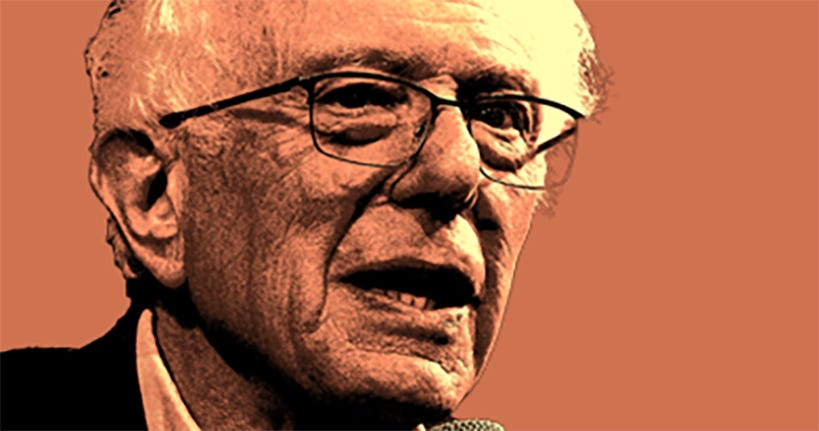
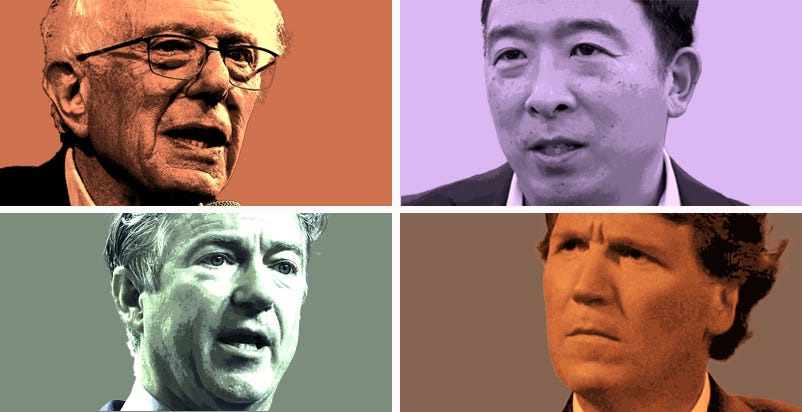
2024: Bernie Sanders
Despite nearly winning the Democratic nomination in 2016, Sanders is not formally a Democrat, and his democratic socialist politics clearly distinguished him from Biden. He is known for his blunt manner and lack of attachment to the party establishment. Although he lacks executive accomplishments, his advocacy of Medicare for All gives him a signature issue that many voters can easily understand and support. On the other hand, he is even older than Biden, and independent voters were especially critical of Biden’s age. He is also firmly identified with the left, which could weaken his independent image among anti-partisan voters.
Progressive representatives Alexandria Ocasio-Cortez and Ro Khanna might also have been possibilities, but neither has Sanders’ “crazy uncle” vibe that helps some voters accept his radicalism—something he shares with Trump. They were also among Biden’s last defenders, which damaged their reputations as party rebels.
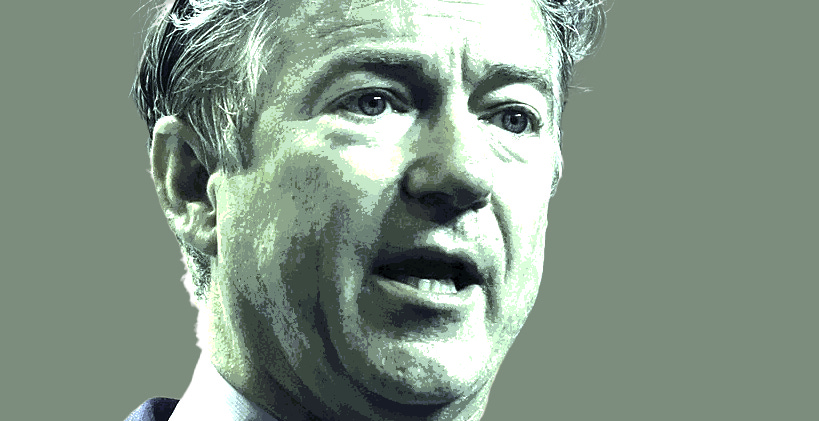
2028: Rand Paul
What Sanders represents for socialism within the Democratic Party, Rand Paul and his father Ron represent for libertarianism within the GOP. This gives Rand Paul distance from Trump on economic issues, foreign policy, and civil liberties. On the other hand, he lacks executive accomplishments and a signature issue. Personality-wise, he is blunt to the point of crankiness but lacks the eccentric charm of his father. His prospects may depend on whether he can develop a more positive and compelling message.
His fellow Kentucky libertarian, Representative Thomas Massie, might also have an opening now that he has gained national attention through his advocacy regarding the Epstein network, though he would have to overcome Trump’s efforts to damage him politically. [Update: Massie has since lost the Republican primary for his seat to a Trump-backed candidate in the most expensive House primary election in US history.]
Outsiders
Another possible type of candidate is someone who has never held office but has support from an important faction within the party.
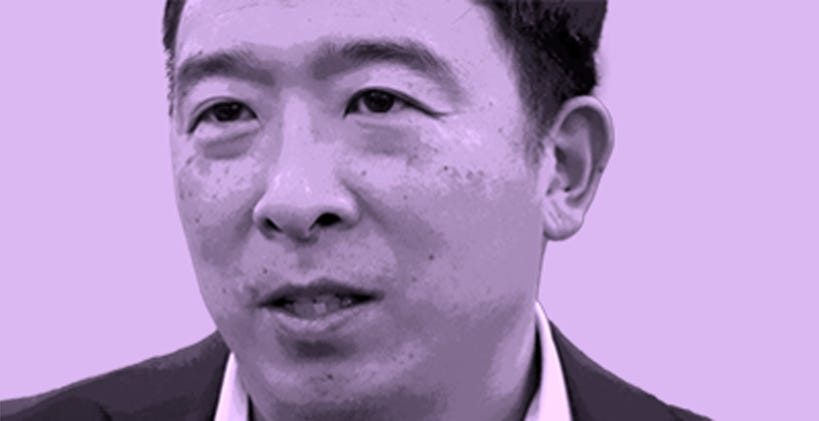
2024: Andrew Yang
Like Sanders, although Yang sought the Democratic nomination in 2020, he is not a member of the party, having left it to co-found the Forward Party. However, he was still invested enough in the party that he was the only prominent backer of Rep. Dean Phillips’ attempt to unseat Biden in the Democratic primaries. If he had jumped back in to challenge Biden himself, his success as a businessman and his writings about entrepreneurship and Universal Basic Income would have given him solid standing as an economic problem-solver.
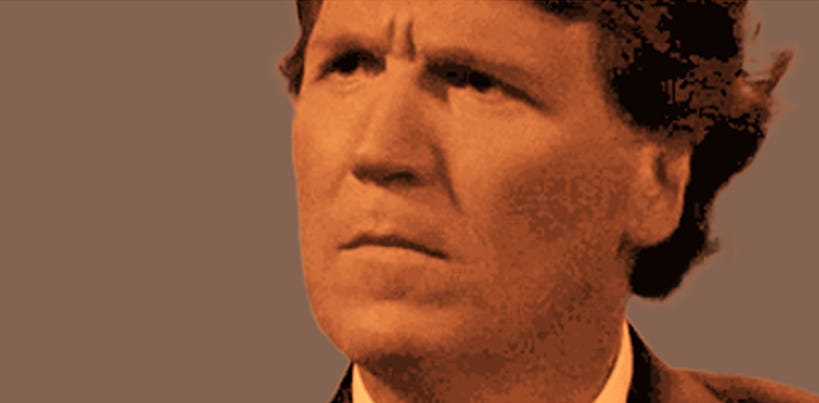
2028: Tucker Carlson
After years of being Trump’s most prominent backer among media personalities, Carlson recently broke with the President over the war with Iran. He, thus, has both impeccable MAGA movement credentials and can make himself out as an independent more in tune with the people than JD Vance, who is forced to defend Trump’s unpopular policies. He has no record of accomplishment as a businessman or a signature issue and might flame out completely in primaries dominated by Trump die-hards, but it will be interesting to see if he makes a run for it like many are speculating he will.
Looking at these names, it becomes clear why incumbent parties rarely nominate candidates capable of saving them in the face of certain defeat. Doing so would require a thorough repudiation of the incumbent president or vice president and their policies, which are usually still popular with the party base. But what if most of the party believed the president should step aside—for example, because he was very old and visibly declining cognitively? If everything aligned just right, might there be room for a pessimism-busting candidate to break through and save the day?
Later in this series, we will explore that possibility for 2028. But in my next post, I will indulge in some alternate history involving precisely such a scenario in 2024. Get ready for America to join the Yang Gang and create a very different 2026!